 By Lauren Holland
Updated November 2026
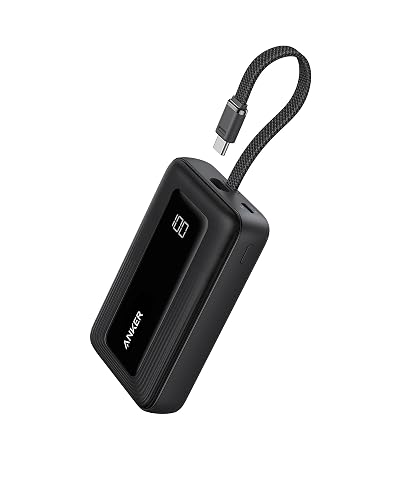
A cell phone battery charger portable unit, usually called a power bank, stores electricity so you can top up your phone when no wall outlet is nearby. This guide shows you how to match capacity, output and connectors to your phone, so the charger you buy actually delivers a full or near-full charge when you need it.
Step 1: Check What Your Phone Needs
Start with your phone’s battery capacity, which manufacturers list in milliamp-hours (mAh). Most current smartphones fall somewhere between about 3,000 and 5,000 mAh. A power bank rated at 10,000 mAh can roughly give a phone of that size one or two full charges, since some energy is lost as heat during transfer.
Next, check your phone’s charging spec. Look for the maximum wattage it accepts, and whether it supports fast charging standards such as USB Power Delivery (PD) or Qualcomm Quick Charge. A charger that outputs less power than your phone accepts will still work, just more slowly.
Step 2: Match Capacity to Your Use
Capacity is the main trade-off between size and runtime. Use this as a starting point:
| Typical use | Suggested capacity |
|---|---|
| Short outings, one emergency top-up | 5,000 mAh |
| Daily carry, one to two full charges | 10,000 mAh |
| Travel days or heavy use, multiple charges | 20,000 mAh |
Step 3: Confirm Ports and Output
Check that the power bank has a USB-C port with Power Delivery support if your phone uses USB-C. Look for the output rating in watts. Owners often report that a 20 W or higher USB-C output noticeably shortens charging time on newer phones. If your phone uses an older Lightning connector, you will need a Lightning cable or an adapter, so confirm that before you buy.
Step 4: Check Safety Features
Choose a unit with built-in protection against overcharging, overheating and short circuits. Manufacturers usually list these as separate protections in the specifications. Buy from a known brand and avoid unbranded units with no certification markings, since those are the ones most likely to overheat.
- Confirm the power bank carries recognized safety certifications such as UL or FCC markings.
- Avoid charging it in a hot car or direct sunlight.
- Stop using it if it swells, smells of burning or gets unusually hot.
Common Mistakes to Avoid
- Buying on capacity alone. A high mAh rating with a slow output port can charge your phone more slowly than a smaller, faster unit.
- Ignoring cable quality. A worn or low-rated cable can cap charging speed even with a capable power bank.
- Forgetting the power bank needs charging. Keep it topped up so it is ready when you need it.
- Assuming all USB-C ports are equal. Some USB-C ports only carry data or basic power, not fast charging.
Recommended Gear
A quality USB-C cable rated for fast charging helps you get the full output of a modern power bank.
A compact power bank with USB-C Power Delivery suits daily carry, since it balances capacity and pocket size.
A short wall charger rated for USB Power Delivery lets you recharge the power bank faster than a basic adapter.
For a broader look at specific models, see 5 Best Battery Chargers for Phone Picks for Travel and Everyday Use (2026) and 7 Best Portable Cell Phone Chargers for iPhone Picks (2026). If your phone charges slowly even when plugged in, Why Does My Phone Say Slow Charger? 6 Causes and Fixes covers the most common causes.
FAQ
What size portable charger do I need for my phone?
For most people, a 10,000 mAh unit gives one to two full charges and fits easily in a bag or pocket. Heavier travelers may want 20,000 mAh.
Will a portable charger damage my phone battery?
A reputable charger with overcharge and overheat protection is generally safe for everyday use. Avoid unbranded units and heat exposure.
Can I use a portable charger while my phone is charging?
Many units support pass-through charging, but it generates extra heat. For safety and battery health, check the manufacturer’s guidance and avoid charging both devices in hot conditions.
Conclusion
To choose the right cell phone battery charger portable, match capacity to how far you travel from an outlet, and confirm the port type and output your phone supports. Prioritize safety certifications and a quality cable. With those checks done, you will get a dependable charge when you need it most.
Related reading
- Solar Battery Charger Power Bank: Does It Really Charge Your Phone?
- Phone Cover with Charger: Does It Hurt Battery Life? Causes and Fixes
Ready to choose one?
About Lauren Holland
Lauren Holland is part of our editorial team and reviews and edits our consumer tech how-to & troubleshooting guides, checking product details against manufacturer specifications and owner feedback.