 By Lauren Holland
Updated November 2026
A custom portable phone charger is a battery pack built or configured around your exact needs, whether that means a specific capacity, a particular port layout, a slimmer profile, or a design that fits a bag strap or a car cupholder. This guide walks you through the decisions that matter, from measuring your daily power use to checking the safety certifications you should never skip. By the end, you will know whether to customize an off-the-shelf pack or assemble your own, and how to avoid the mistakes that leave people with a charger that is too small, too hot, or simply incompatible with their phone.
Step 1: Work Out How Much Power You Actually Need
Most people guess at battery capacity and end up disappointed. Start with your phone’s battery size, which manufacturers usually list in milliamp-hours (mAh) or watt-hours (Wh). A typical modern smartphone battery sits somewhere around 4,000 to 5,000 mAh at 3.85 V, which works out to roughly 15 to 19 Wh. Because conversion between battery packs and phones loses energy as heat, a pack rated at 10,000 mAh at 3.7 V (about 37 Wh) will not deliver a full 37 Wh to your phone. Expect real-world output closer to 60 to 70 percent of the rated figure once you account for conversion losses.
Shopping for one? See our guide: 7 Best Portable Cell Phone Chargers for iPhone Picks (2026).
To pin down your number, ask yourself three questions:
- How many full phone charges do you need between wall outlets? One, two, or three?
- Do you also need to charge a tablet, earbuds, or a smartwatch?
- Will you be charging the pack itself on the go, or only at home?
A useful rule: multiply your phone’s battery capacity by the number of charges you want, then divide by 0.65 to allow for conversion losses. If your phone holds 4,500 mAh and you want two full charges, you need about 13,800 mAh of pack capacity. That usually points to a 15,000 mAh or 20,000 mAh unit.
Step 2: Choose Your Ports and Output Standards
Port selection is where many custom builds go wrong. Your charger needs to match the connectors your devices use today and, ideally, the ones you will use next. USB-C has become the common standard for phones, many tablets, and laptops, while older Lightning cables still appear on many iPhones. Think about the following:
- At least one USB-C port with Power Delivery (PD) support for fast charging.
- A second USB-C or USB-A port if you charge two devices at once.
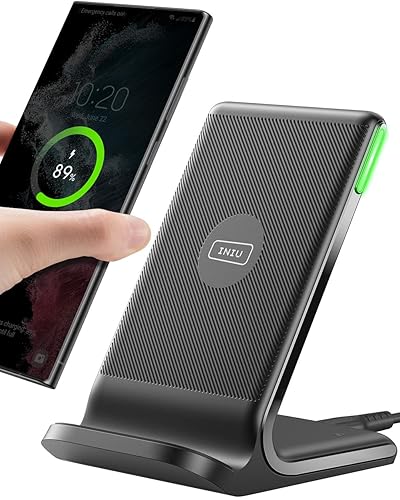
- A wireless charging pad if you use a phone that supports Qi or a similar standard.
Output wattage matters as much as the port type. Most current phones accept 20 W to 30 W over USB-C PD, while some devices take more. If the pack cannot push enough power, your phone will charge slowly even though the cable is fine. Check your phone manufacturer’s listed maximum input before you pick a wattage target.
Step 3: Decide Between Modifying and Building From Scratch
You have two broad routes. The first is customizing a commercial power bank: adding a custom label, choosing a color or material, bundling specific cables, or ordering a version with a particular port configuration. Many manufacturers offer this for bulk or branded orders. The second is building a pack yourself from individual components, which gives maximum control but requires electronics knowledge.
If you are not comfortable working with lithium cells, soldering, and battery management circuits, stick with the first route. Building your own is a legitimate hobby, but a lithium-ion cell that is punctured, overcharged, or shorted can overheat or catch fire. If you do build, use protected cells with an integrated protection circuit and a charge controller rated for your chemistry.
Tools and Supplies for a DIY Build
- Protected lithium-ion or lithium-polymer cells of the correct capacity and size.
- A battery management system (BMS) or charge controller designed for your cell count.
- A boost converter or USB PD trigger module to step voltage up to 5 V, 9 V, or higher as needed.
- A soldering iron with temperature control, flux, and solder rated for electronics.
- A multimeter to confirm voltages and check for shorts before connecting anything.
- Heat-shrink tubing, insulated wire, and a sturdy enclosure with ventilation or room for airflow.
Step 4: Plan the Physical Design
Once the electronics are sorted, the housing decides whether the charger is pleasant to carry. Measure the space it has to fit: a pants pocket, a laptop sleeve, a camera bag, or a car door pocket each impose different limits. Pay attention to thickness and weight. A 20,000 mAh pack is noticeably heavier than a 10,000 mAh pack, and that difference adds up in a bag.
Materials also affect heat. Metal shells dissipate heat better than plastic, but they can conduct heat to your hand during fast charging. Plastic is lighter and insulating, but needs vent slots or a thermal path if the pack will run hard. Leave clearance around the cells so they can breathe, and never seal the pack in an airtight case.
Step 5: Test Before You Trust It
Before using a custom charger for real, run a short test sequence:
- Charge the pack fully from a known-good wall adapter, watching the indicator lights.
- Connect your phone and confirm it reports fast charging, not a slow trickle.
- Monitor temperature by hand. The pack should feel warm, not hot. Stop if it becomes uncomfortable to touch.
- Check output voltage with a multimeter if you built it yourself, and verify the cutoff at low battery.
- Repeat the cycle a few times to confirm stable performance before you rely on it.
Common Mistakes
- Ignoring conversion losses. Assuming a 10,000 mAh pack gives you two full phone charges is the most frequent error.
- Skipping safety protection. Unprotected cells and missing overcharge or short-circuit cutoffs are the main fire risks.
- Choosing ports by habit. A pack with only USB-A will leave you short when your next phone uses USB-C only.
- Sealing the enclosure. Heat trapped inside shortens battery life and can damage cells.
- Overlooking airline rules. Lithium packs are regulated on flights, and capacity limits apply. Check your airline and the relevant aviation authority before traveling.
Tips for Better Results
- Look for certifications such as UL or other recognized safety marks on any commercial pack you modify or buy.
- Keep the pack out of direct sun and avoid charging it under a pillow or in a hot car.
- Store the pack at a partial charge if you will leave it unused for weeks.
- If a custom pack swells, smells of burning, or gets too hot, stop using it immediately and dispose of it at a battery recycling point.
Recommended gear
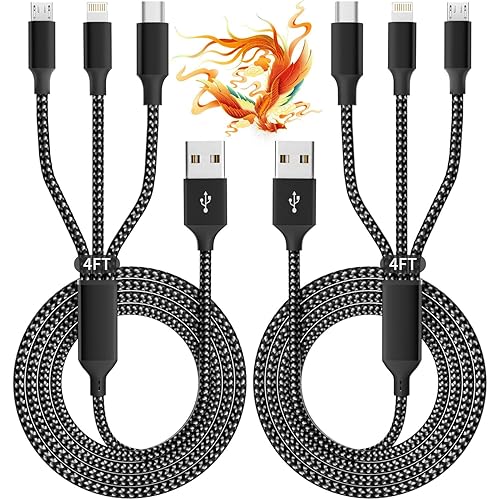
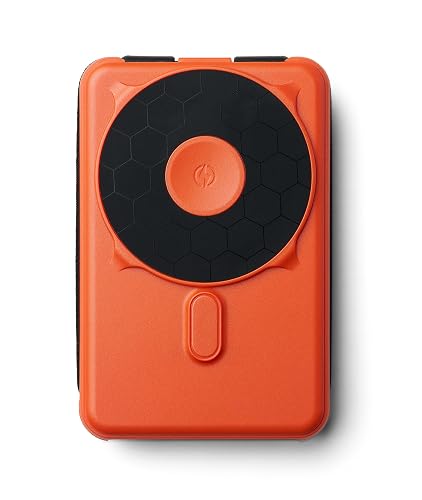
For a commercial starting point, a compact USB-C PD power bank is the easiest base to customize; look for models from established brands such as Anker or Belkin and keep a View on Amazon style option in mind for reference. If you plan to charge a phone and a laptop from one pack, a higher-output unit with two USB-C PD ports helps. For DIY builders, a dedicated USB PD trigger board such as those from well-known electronics suppliers lets you select the output voltage your phone requests, and a protected cell pack removes much of the risk from the build. Finally, a multimeter is essential for checking voltages before you connect any custom circuit to a phone, and a heat-resistant sleeve or case helps protect the pack in a bag.
Before you buy, read our comparisons of 7 Best iPhone Portable Phone Charger Picks for Every Need (2026) and Custom Power Bank Charger Picks: 7 Best Options in 2026 to see which form factors and port layouts are already on the market.
FAQ
What does “custom portable phone charger” mean?
It refers to a battery pack that is configured or built to match a specific set of needs, such as capacity, port types, size, or appearance. It can be a modified commercial product or a homemade assembly.
How many charges will a 10,000 mAh pack give my phone?
Roughly one to one and a half full charges for a typical 4,000 to 5,000 mAh phone battery, because energy is lost during conversion. Actual results vary by phone and charging speed.
Do I need a PD-compatible port?
If you want fast charging on a modern phone, yes. Power Delivery lets the pack negotiate a higher voltage and wattage with the device, which is much faster than standard USB output.
Is it safe to build my own portable charger?
It can be, but only with protected lithium cells, a proper battery management circuit, and careful testing. If you lack electronics experience, a commercial pack is the safer choice.
Can I charge a laptop with a custom phone charger?
Only if the pack supports the higher wattage and voltage the laptop requires, typically through USB-C PD at 45 W or more. Many phone-focused packs cannot do this.
How do I know if my custom charger is overheating?
It should feel warm but not hot. If it becomes uncomfortable to touch, smells unusual, or swells, stop using it at once and check its condition. Consult a professional or the manufacturer if you have concerns about a battery.
How should I store a custom battery pack?
Keep it at a partial charge, around 40 to 60 percent, in a cool, dry place away from direct sunlight, and recharge it every few months if it will sit unused.
Conclusion
A custom portable phone charger is only as good as the planning behind it. Start by measuring your real power needs, choose ports and wattage that match your current and future devices, and decide whether modifying a commercial pack or building one suits your skills. Always prioritize safety through protected cells, certifications, and proper testing.
Related reading
Ready to choose one?
About Lauren Holland
Lauren Holland is part of our editorial team and reviews and edits our consumer tech how-to & troubleshooting guides, checking product details against manufacturer specifications and owner feedback.