By Owen Palmer
Updated November 2026
A laptop computer docking station turns one USB-C or Thunderbolt cable into a full desk setup, with extra monitors, wired Ethernet, USB ports and charging. The right dock depends on how many displays you run, which laptop brand you own, and how much power your machine needs. The picks below were chosen from product listings, brand reputation and common owner feedback, weighted toward compatibility, display count and charging wattage.
Our top picks at a glance
- 1
 TOP CHOICEBest overallAnker Laptop Docking Station Dual Monitor, 8-in-1 USB C Hub with 4K HDMIView on Amazon
- 2
 TOP CHOICEBest for triple monitorsLIONWEI Triple 4K, Dual HDMI+DP, 10Gbps, 100W PD, Ethernet, 8 USB C/AView on Amazon
- 3
 TOP CHOICEBest for high-wattage chargingAnker Prime Docking Station, 14-in-1 Laptop Docking Station Dual MonitorView on Amazon
- 4
 Best for Dell business laptopsDell Pro Laptop Docking Station WD25, USB-C, 100W, DisplayPort, HDMIView on Amazon
- 5
 Best for three displays on a budgetAnker Nano Laptop Docking Station, 13in1 Dock with Detachable 6in1 USBC HubView on Amazon
- 6
 Best compact dual-display dockDual 4K@60Hz for DP 1.4, 10Gbps USBC & USBA Data Ports, SD/TF, for FulView on Amazon
- 7
 Best for older or non-USB-C laptopsfor Windows and Mac (Driver Required), USB 3.0 or USB-C, 2x HDMI, GigaView on Amazon
Our Top Picks
Quick Comparison
| Product | Best for | Key feature |
|---|---|---|
| Anker Laptop Docking Station Dual Monitor, 8-in-1 | Everyday dual monitors | Dual 4K HDMI, 85W PD |
| LIONWEI Triple 4K Docking Station | Triple monitor setups | Three displays, 100W PD |
| Anker Prime Docking Station, 14-in-1 | High-power laptops | 160W max output |
| Dell Pro Laptop Docking Station WD25 | Dell business laptops | Quad display, 100W |
| Anker Nano Docking Station, 13in1 | Three displays | 2 HDMI plus DisplayPort |
| Anker Nano Docking Station Dual Monitor, 8-in-1 | Compact desks | Dual 4K at 60Hz |
| Plugable USB 3.0 Universal Docking Station | Older laptops | USB 3.0 or USB-C support |
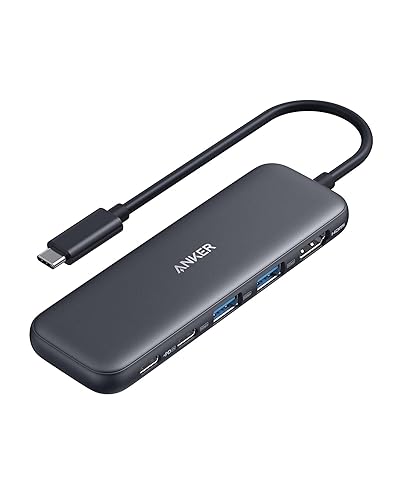
Anker Laptop Docking Station Dual Monitor, 8-in-1 USB C Hub with 4K HDMI
AnkerDual HDMI USB C Dock, 1Gbps Ethernet, 85W Max PD, SD/TF Card Reader, for USB C Laptops, XPS and More (Charger Not Included) Laptop Docking Station Dual Monitor, 8-in-1 USB C Hub with 4K HDMI
Best for: Everyday dual-monitor desk setups
This dock suits people who want two external displays, wired internet and a card reader without a complicated setup. Owners often report it works well with USB-C laptops from Dell, HP and Lenovo.
Pros
- Dual HDMI outputs for two external monitors
- Gigabit Ethernet and SD/TF card reader included
Cons
- Charger is not included, so you need your own adapter
LIONWEI Triple 4K, Dual HDMI+DP, 10Gbps Docking Station Dual Monitor 4K HDMI 13-in-1 USB C Hub
LIONWEI Triple 4K, Dual HDMI+DP, 10Gbps, 100W PD, Ethernet, 8 USB C/A Ports, Switching Mode Botton, Audio, for Dell,HP,Lenovo Docking Station Dual Monitor 4K HDMI 13-in-1 USB C Hub for Laptop MacBook
Best for: Triple monitor workstations
A good fit for users running three displays who want one cable back to the laptop. It is listed for Dell, HP and Lenovo machines with a switching mode button for display layouts.
Pros
- Supports three displays through HDMI and DisplayPort
- Eight USB ports for keyboards, drives and peripherals
Cons
- Multi-display setups depend on your laptop’s graphics support
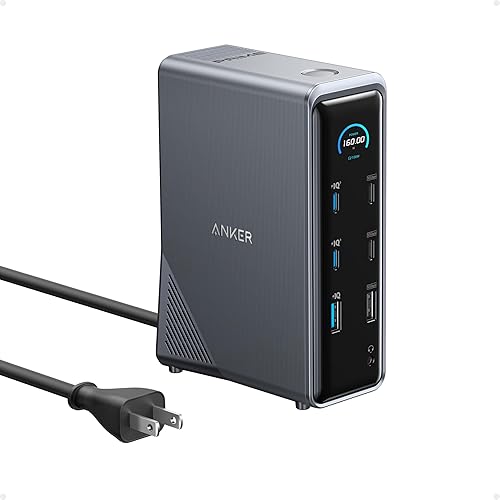
Anker Prime Docking Station, 14-in-1 Laptop Docking Station Dual Monitor
Dual 4K HDMI, 160W Max Output, 10Gbps Data Transfer, Smart Interface, Audio and Ethernet Ports for Dell, HP, Lenovo and More Anker Prime Docking Station, 14-in-1 Laptop Docking Station Dual Monitor
Best for: Power-hungry laptops and fast data transfer
This dock targets users with larger laptops that draw significant power while docked. Its 160W max output and 10Gbps data transfer make it a strong choice for heavier workloads.
Pros
- 160W max output for high-wattage laptops
- 10Gbps data transfer on USB ports
Cons
- Larger footprint than compact docks
Dell Pro Laptop Docking Station WD25, USB-C, 100W, DisplayPort, HDMI
Universal Dock, Ethernet, USB-A Ports, USB-C Ports, Power Delivery Charging, Quad Display, Plug and Play, Office Ready, WD25 Dell Pro Laptop Docking Station WD25, USB-C, 100W, DisplayPort, HDMI
Best for: Dell business laptops in office environments
Designed for office deployments, this dock covers quad-display setups and includes Ethernet and plug-and-play operation. It suits IT-managed desks more than home enthusiasts.
Pros
- Quad display support and 100W power delivery
- Plug-and-play operation with minimal setup
Cons
- Positioned for business use, so it may be more than home users need
Anker Nano Laptop Docking Station, 13in1 Dock with Detachable 6in1 USBC Hub
3 Display USB C Dock (2 HDMI+1 DP), 10 Gbps USBC, 3 USBA, Audio, SD/TF, Ethernet, 100W Max PD for Dell/Lenovo/HP Home Office Anker Nano Laptop Docking Station, 13in1 Dock with Detachable 6in1 USBC Hub
Best for: Three-display setups with a detachable hub
This dock combines two HDMI outputs with a DisplayPort connection and a detachable USB-C hub. It works well for users who want flexibility in where the hub sits on the desk.
Pros
- Three display outputs across HDMI and DisplayPort
- Detachable 6-in-1 hub adds portability
Cons
- Thirteen ports can feel crowded on a small desk
Buying Guide
Display Count and Resolution
Start by counting how many external monitors you want to run at once. Some docks support a single display, while others handle two or three, and the supported resolution and refresh rate can vary by port type. Check that the dock’s video outputs match the connections on your monitors, such as HDMI or DisplayPort.
Laptop Compatibility
Not every dock works with every laptop, even if both use USB-C. Confirm that your laptop supports video output over USB-C or Thunderbolt, and look for brand compatibility notes for Dell, HP, Lenovo, MacBook, or Windows machines. Some docks also require a driver install, especially on Mac, so factor that into your setup time.
Power Delivery Wattage
Power delivery determines how much electricity the dock can send back to your laptop while it is connected. Match the wattage to your laptop’s charger, since a dock that supplies less power may cause slow charging or drain the battery under heavy use. Remember that some docks do not include a power adapter, so you may need to buy one separately.
Port Selection and Data Speed
Think about the peripherals you use every day, such as USB-A devices, SD cards, wired Ethernet, or audio jacks. Data speed also matters, so check whether the dock offers 5Gbps, 10Gbps, or other transfer rates if you move large files or use fast external storage. A dock with more ports is useful, but only if the ones you need are included.
Portability and Desk Space
Consider whether the dock will stay on one desk or travel with you. Compact docks are easier to carry and fit small workspaces, while larger multi-port models tend to offer more connections but take up more room. Choose the size that fits your daily routine and available space.
FAQ
Do I need a laptop docking station if I already have a USB-C hub?
A basic USB-C hub adds ports, but a docking station usually adds more display outputs, higher power delivery, and wired networking in one unit. If you run multiple monitors or want to charge your laptop while working at a desk, a dock is typically the better choice. A simple hub may be enough for occasional use with one monitor.
Will a docking station charge my laptop?
Many docking stations can pass power through to your laptop, but this depends on the dock’s power delivery rating and your laptop’s charging requirements. Some docks need their own power adapter to deliver that charge. Check the wattage listed for each model against your laptop’s charger.
Do docking stations work with both Windows and Mac?
Many docks support both systems, but some models require a driver on Mac or specific setup steps for certain display modes. Always read the compatibility details for your operating system before buying. Confirm that the dock supports the number of monitors you plan to use on your particular machine.
Why won’t my second or third monitor display?
Display limits often come from the laptop’s graphics capability, the dock’s output design, or the port used to connect the dock. Make sure your monitor cables are connected to the correct dock outputs and that your computer’s display settings detect the extra screens. Updating your laptop’s graphics driver can also help.
Can a docking station improve my internet speed?
A dock with a wired Ethernet port can provide a more stable connection than Wi-Fi, which is helpful for video calls, large downloads, and cloud work. However, the dock cannot exceed the speed of your internet plan. Using a wired connection mainly improves reliability rather than raw bandwidth.
Conclusion
If you need one or two monitors plus charging and everyday ports, a mid-range dock with solid power delivery and broad compatibility is the most practical choice. For a larger multi-monitor office setup, pick a model built for three displays with higher wattage and more USB ports.
Travelers and users with compact desks should look at smaller, lighter docks that still cover Ethernet, video output, and charging. Matching the dock to your laptop brand, display count, and power needs will get you the most reliable setup.
Related reading
- What Is a Laptop Docking Station? A Complete Guide
- Best Laptop Docking Stations
- 5 Best Laptop PC Docking Station Picks for Every Setup (2026)
- Portable Computer Screen for Laptop: Which Type Fits You Best?
- Lenovo ThinkPad Laptop Computer Buying Guide: 7 Factors That Matter (2026)
About Owen Palmer
Owen Palmer is part of our editorial team and reviews and edits our consumer tech how-to & troubleshooting guides, checking product details against manufacturer specifications and owner feedback.