 By Lauren Holland
Updated November 2026
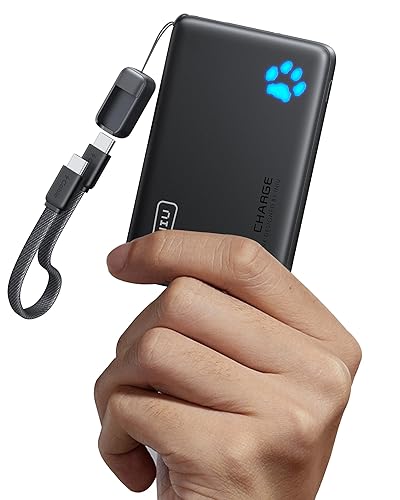
The Anker Maggo Power Bank 10K Slim is a magnetic, pocket-sized battery pack designed to snap onto the back of a compatible phone and add roughly 10,000 mAh of reserve charge. It works best for people who want a thin, lightweight backup for a day out rather than a full multi-day supply. Whether it fits your needs depends on how much charge you actually use and whether your phone supports magnetic attachment.
Why a 10K Slim Pack Often Feels Smaller Than Its Rating
The 10,000 mAh figure printed on the label is measured at the battery cell voltage, which is typically 3.6 to 3.7 volts. Phones charge at a higher voltage, usually 5 volts, and the conversion circuit loses some energy as heat. Manufacturers generally state that the usable output is closer to 60 to 70 percent of the rated capacity, so you should expect something like 6,000 to 7,000 mAh of real phone charge. For most smartphones with batteries in the 4,000 to 5,000 mAh range, that is enough for one full recharge and a bit more.
Shopping for one? See our guide: 6 Best Jackery Power Bank 20000 mAh Options for Travel and Everyday Use (2026).
Owners often report that the pack delivers one full charge to a standard phone and a partial top-up to a second device. That lines up with the math above and is a reasonable expectation to plan around. A related read: How to Choose a Power Bank: Capacity, Ports, Flying.
The Factors That Change How Much You Actually Get
Several variables affect the real-world result, and most of them are within your control.
- Your phone’s battery size. A phone with a 5,000 mAh battery will get close to a full charge from the pack. A phone with a smaller battery may take the pack to nearly empty in a single session.
- Charging wattage. The pack supports magnetic wireless output rated for the MagSafe standard, which tops out around 15 watts on compatible iPhones. Wired USB-C output will be faster if you use a suitable cable, but the magnetic route is the main reason to buy this model.
- Heat. Wireless charging generates heat, and heat slows charging and reduces efficiency. Removing a thick phone case before attaching the pack usually improves speed.
- Phone case compatibility. Magnets do not pass through thick cases or cases with metal plates. A case thicker than about 3 millimeters can weaken the magnetic connection.
- Your phone’s own charge limit. Some phones slow charging once the battery passes around 80 percent to protect battery health, which makes the last part of a top-up noticeably slower.
What to Do If the Pack Charges Slower or Disconnects
If the pack keeps slipping off or your phone charges more slowly than expected, work through these checks in order. Most issues resolve in the first two steps.
- Remove the phone case and wipe the back of the phone and the pack with a dry cloth to clear lint or grit.
- Confirm that your phone supports magnetic charging. Many Android phones do not, so the pack will attach but charge only if you use the USB-C port.
- Check that the phone is set to allow wireless charging in its battery settings.
- Let the phone and pack cool down for 10 to 15 minutes if either feels warm to the touch.
- Test wired USB-C output with a known-good cable rated for at least 3 amps to see whether the problem is the magnetic connection or the pack itself.
- If the pack still underperforms, check Anker’s support pages for firmware or troubleshooting guidance before assuming a defect.
How the 10K Slim Compares to Other Options
The 10K Slim trades capacity for portability. If you carry a larger tablet or need to charge two phones, a higher-capacity pack will serve you better. For guidance on matching capacity to your daily use, read How to Choose a Power Bank: Capacity and Key Features. If you want to understand the charging standards involved, USB-C Chargers, Power Banks and Wireless Chargers Explained covers the basics, and Understanding USB-C Charger Wattage and Power Delivery explains why wattage numbers differ between devices.
For travelers building a kit, Travel Tech Packing List: Power, Connectivity and Storage shows where a slim pack fits alongside cables and adapters. If you are shopping across categories, Best Power Banks gives a broader view of the market.
What we’d use
- Anker Maggo Power Bank 10K Slim: the model itself, best for a thin magnetic backup on a compatible iPhone. View on Amazon
- Anker MagGo Magnetic Phone Case: a thin case that keeps magnetic alignment strong without adding bulk. View on Amazon
- Anker 735 Charger: a higher-wattage wall charger if you want to top up the pack quickly at home. View on Amazon
Related questions
Does the anker maggo power bank 10k slim work with Android phones?
Some Android phones support magnetic charging, but many do not. The pack still works through its USB-C port with a standard cable, so you can charge any phone that accepts USB-C input.
Can I charge the pack and a phone at the same time?
Pass-through charging depends on the model’s design and your charger. Check the product specifications before relying on this, since many slim packs prioritize output over simultaneous input.
Will the pack damage my phone battery?
Quality packs include overcharge and temperature protection, and the pack should stop charging once your phone is full. Avoid leaving the pack and phone in a hot car or on a warm surface for long periods, since sustained heat degrades lithium batteries regardless of charger.
Can I bring the pack on a plane?
Power banks in this size range are generally allowed in carry-on luggage but not in checked bags. Confirm current rules with your airline and the Federal Aviation Administration before you travel.
How long does a full recharge of the pack take?
Charging time depends on the input charger wattage. Manufacturers list the rated input in the product specifications, and a higher-wattage wall charger shortens the wait noticeably.
Related reading
Ready to choose one?
About Lauren Holland
Lauren Holland is part of our editorial team and reviews and edits our consumer tech how-to & troubleshooting guides, checking product details against manufacturer specifications and owner feedback.