 By Lauren Holland
Updated November 2026
The main types of charger for phone fall into a few clear groups: wall chargers, car chargers, wireless pads and portable power banks. Each one delivers power differently, and the right choice depends on your phone’s port, its maximum charging speed and where you plan to use it. This guide walks through how to identify what your phone needs and which charger type fits.
Step 1: Identify Your Phone’s Charging Port
Start by checking the port on your phone. Most current phones use USB-C or Lightning, while older Android devices often use Micro-USB. The port determines which cable end you need, but it does not tell you the charger’s power output. For that, look at the specifications printed on the phone’s packaging or in the manufacturer’s support pages.
Shopping for one? See our guide: 6 Best Phone Charger Cords iPhone Buyers Should Considers in 2026.
Step 2: Choose a Charger Based on Where You Will Use It
Where you charge matters as much as the port. A wall charger suits a bedside or desk. A car charger, often called a cigarette lighter adapter, plugs into a 12-volt socket and is built for short trips. A wireless charger uses inductive coils and works best on a flat surface. A portable power bank covers situations with no outlet nearby, such as travel or outdoor days.
Step 3: Match Power Output to Your Phone
Charger output is measured in watts (W), calculated from voltage and current. Many phones support fast charging only when paired with a compatible adapter and cable. Manufacturers list the maximum supported wattage in their spec sheets. A higher-wattage charger will not force a phone to draw more power than it accepts, so it is safe to use a stronger adapter. Using a much weaker one, however, will slow charging noticeably.
Quick Charging Checklist
- Confirm your phone’s port type (USB-C, Lightning or Micro-USB).
- Find the maximum supported wattage in the manufacturer’s specifications.
- Pick a charger whose output meets or exceeds that number.
- Use a cable rated for the same power level.
- Choose the charger form factor (wall, car, wireless or portable) that fits your routine.
Step 4: Compare the Main Charger Types
| Charger type | Best for | Typical limitation |
|---|---|---|
| Wall adapter | Home and office use | Needs an outlet |
| Car adapter | Driving and road trips | Works only with a 12V socket |
| Wireless pad | Nightstands and desks | Slower than a wired cable |
| Power bank | Travel and outages | Must be recharged itself |
If you drive often, a dedicated car unit is worth considering. Our guide to a Wireless Phone Charger for Car: How to Choose, Mount and Use One (2026) covers mounting options, and Phone Charger for Cigarette Lighter: How to Choose and Use One (2026) explains what to check in a 12V adapter.
Common Mistakes to Avoid
- Assuming a charger with a fast-charging label works with every phone.
- Pairing a fast adapter with a thin or damaged cable, which can limit speed.
- Buying a wireless pad for a phone case that blocks the coil.
- Using a low-quality car adapter that can overheat in hot vehicles.
- Ignoring the phone’s maximum wattage and choosing a charger that is too weak.
Recommended Gear
A multi-port wall adapter with USB-C output covers most current phones and tablets. View on Amazon
A braided USB-C to USB-C cable matched to your charger’s rated wattage helps avoid slow charging. View on Amazon
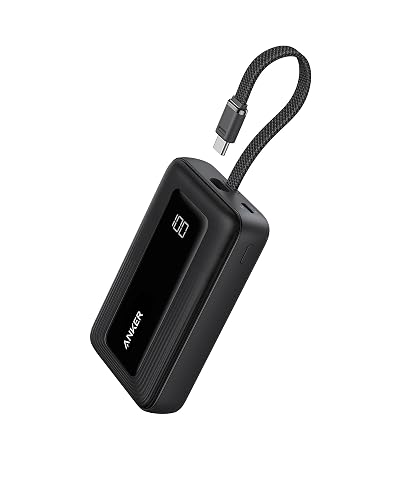
A compact power bank with USB-C input and output is useful for days away from an outlet. View on Amazon
FAQ
Can I use any charger with my phone?
Most phones accept any charger that uses a compatible port and standard USB power delivery, but speeds vary. Check your phone’s maximum supported wattage to get the best results.
Does a higher-wattage charger damage my phone?
Generally no. The phone draws only the power it can accept, so a higher-output charger is safe when it meets the USB standard. Problems usually come from damaged cables or counterfeit adapters.
Is wireless charging as fast as a cable?
Usually not. Wireless charging typically runs slower than a wired connection and produces more heat, so it is best for overnight or desk use.
Conclusion
Identify your phone’s port and maximum wattage first, then choose the charger form that matches where you use your phone most. Pair it with a cable rated for the same power level. For broader options, see Universal Charger for Phone: 5 Best Multi-Cable Picks for Everyday Use (2026) or Types of Phone Charging Cables and Connectors Compared.
Ready to choose one?
About Lauren Holland
Lauren Holland is part of our editorial team and reviews and edits our consumer tech how-to & troubleshooting guides, checking product details against manufacturer specifications and owner feedback.