 By Lauren Holland
Updated November 2026
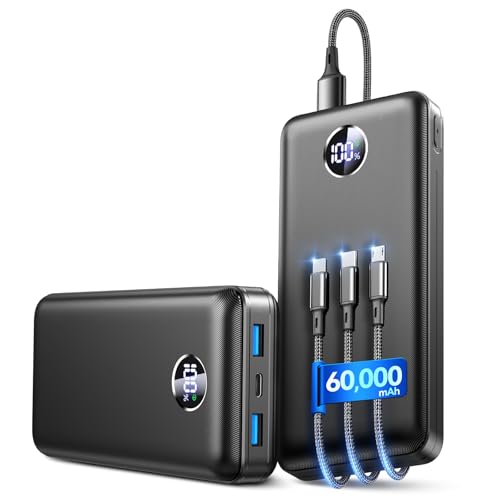
A power bank of mobile is a portable battery that tops up your phone when no wall outlet is nearby. This guide shows you how to read the specs, match capacity to your phone, and avoid the common mistakes that shorten battery life or cause overheating. By the end, you will know which power bank and mobile combination fits your daily use. For a deeper look, Power Bank Outlet Plug: How to Use One Safely and Choose the Right Type covers this in detail.
Step 1: Check Your Phone’s Battery and Charging Limits
Start with your phone’s battery capacity, which manufacturers list in milliamp-hours (mAh). Most current smartphones carry batteries somewhere between roughly 3,500 and 5,500 mAh. A power bank rated at 10,000 mAh can typically give a phone about two full charges, because conversion losses during charging eat part of the stored energy.
Shopping for one? See our guide: 6 Best Jackery Power Bank 20000 mAh Options for Travel and Everyday Use (2026).
Next, check the maximum charging input your phone accepts. A phone that tops out at 20 W will not benefit from a power bank advertising 65 W. Look in your phone’s settings or the manufacturer’s spec sheet for “fast charging” wattage.
Step 2: Match the Power Bank’s Output Ports to Your Phone
Port type decides whether your cable and your phone will work together. Use this quick reference:
| Phone Connector | What to Look For on the Power Bank |
|---|---|
| USB-C (most Android phones, newer iPhones) | A USB-C output port that supports Power Delivery (PD) |
| Lightning (older iPhones) | A USB-A or USB-C port plus a Lightning cable, or a USB-C to Lightning cable |
| Wireless charging | A Qi-certified wireless pad built into the bank, with stated output in watts |
If you own an iPhone that supports magnetic alignment, a MagSafe compatible power bank can snap to the back of the phone. For more on that format, see MagSafe Compatible Power Bank: How to Choose and Use One (2026).
Step 3: Confirm Safety Certifications and Airline Rules
Look for independent safety certifications printed on the product or in its documentation. Common marks include UL, CE, and FCC for the US market. Avoid unbranded units with no certification information, since those are the ones most often linked to overheating complaints.
If you plan to fly, check the rating before you pack it. Most airlines follow a 100 Wh limit for carry-on batteries, and many accept higher-rated units with airline approval. A detailed walkthrough is in Is 20000mAh Power Bank Allowed in Flight? Yes, Here's the Rule.
Step 4: Use and Store the Power Bank Correctly
Charge the bank fully before a trip, and keep it between roughly 20 and 80 percent for daily use if you want to preserve battery health. Avoid leaving it in a hot car or direct sun, and stop using it if the casing swells or gets unusually hot. For a broader view of how these devices charge and discharge, read How Power Bank Charge Works: A Step-by-Step Guide for Beginners.
Common Mistakes to Avoid
- Buying on milliamp-hours alone while ignoring output wattage and port type.
- Using a cable rated for data only, which can limit charging speed.
- Charging the power bank and phone at the same time on a low-quality cable, which generates extra heat.
- Ignoring a bank that has been dropped or damaged.
- Assuming a higher rating always means faster charging. Your phone’s input limit sets the real speed.
Recommended Gear
- Anker 737 Power Bank is a high-output USB-C option that suits users who want fast charging for both phone and laptop. View on Amazon
- Anker 511 Power Bank (PowerCore 10000) is a compact choice for everyday phone top-ups in a pocket or bag. View on Amazon
- Belkin BoostCharge Pro MagSafe Wireless Power Bank pairs with a MagSafe-compatible iPhone without a cable. View on Amazon
FAQ
How many times can a power bank of mobile charge my phone?
It depends on the bank’s capacity and your phone’s battery size. As a rough guide, divide the bank’s mAh by your phone’s mAh, then account for about 20 to 30 percent energy loss during conversion.
Can I charge my phone and the power bank at the same time?
Many banks support pass-through charging, but it generates heat and slows both processes. Charging them separately is usually safer and more efficient.
Is it safe to leave a power bank plugged in overnight?
Most units stop charging once full, but it is still better to unplug once charged. If you have a medical device or a question about battery safety, consult a qualified professional.
Conclusion
A good power bank of mobile matches your phone’s input speed, has the correct port type, and carries recognized safety certifications. Start with your phone’s battery size and charging limit, then choose a capacity that fits how far you travel from an outlet. Check airline rules before flying, and store the bank away from heat.
Related reading
Ready to choose one?
About Lauren Holland
Lauren Holland is part of our editorial team and reviews and edits our consumer tech how-to & troubleshooting guides, checking product details against manufacturer specifications and owner feedback.